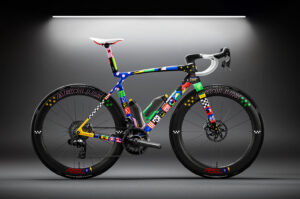
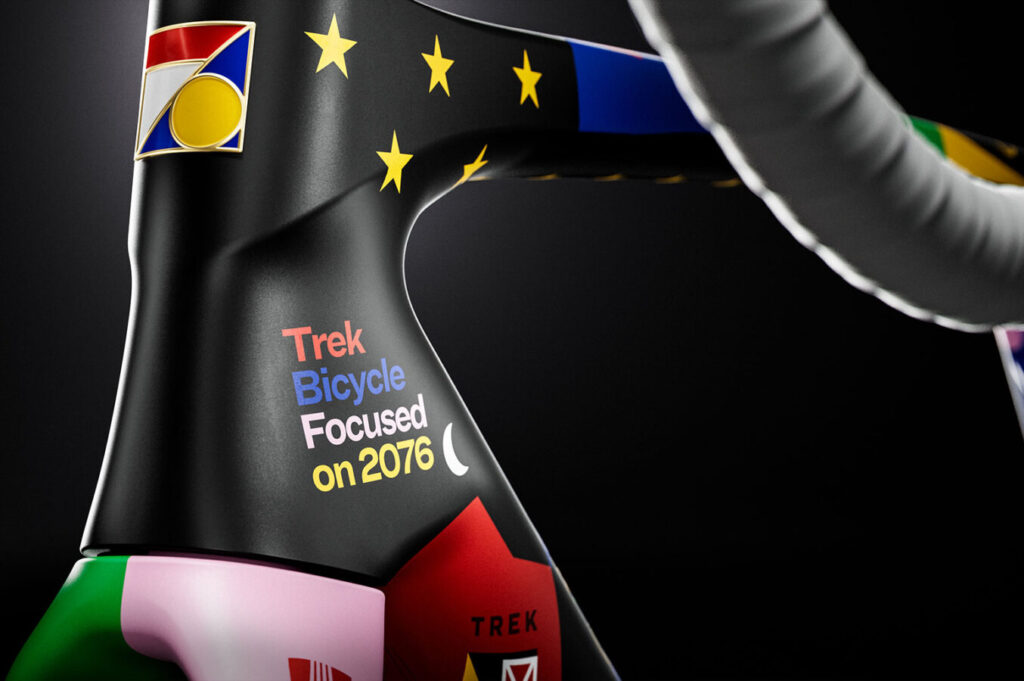
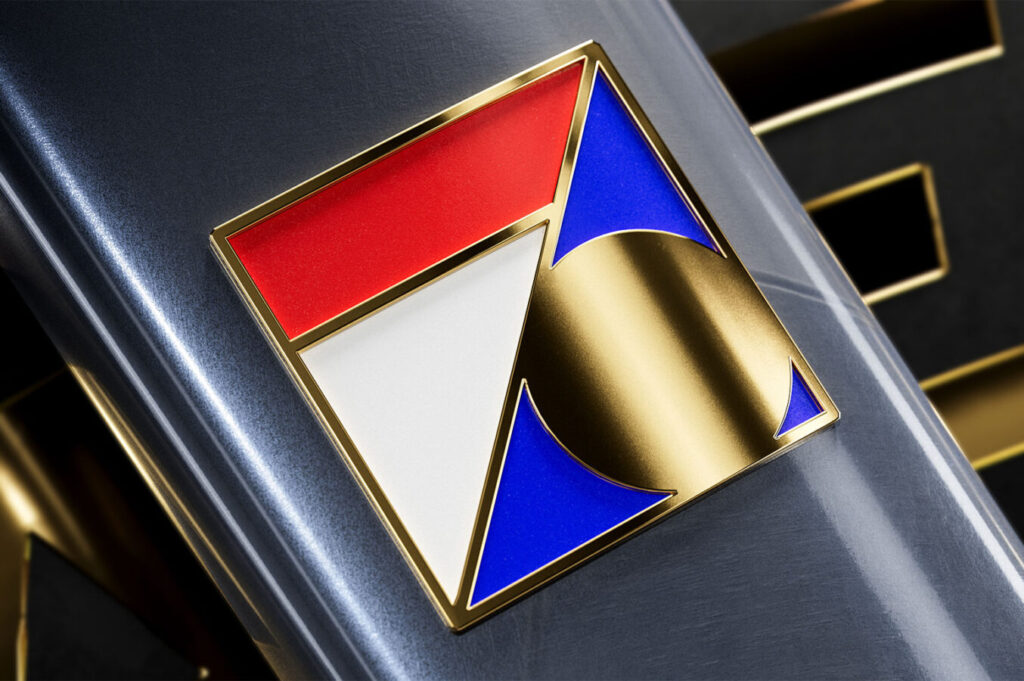
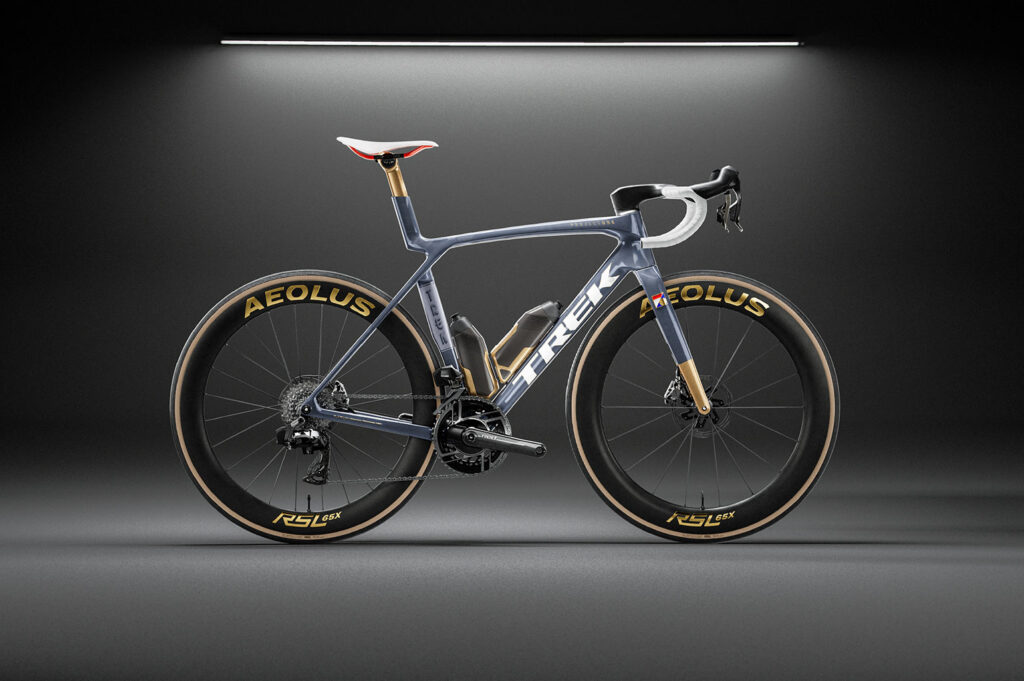
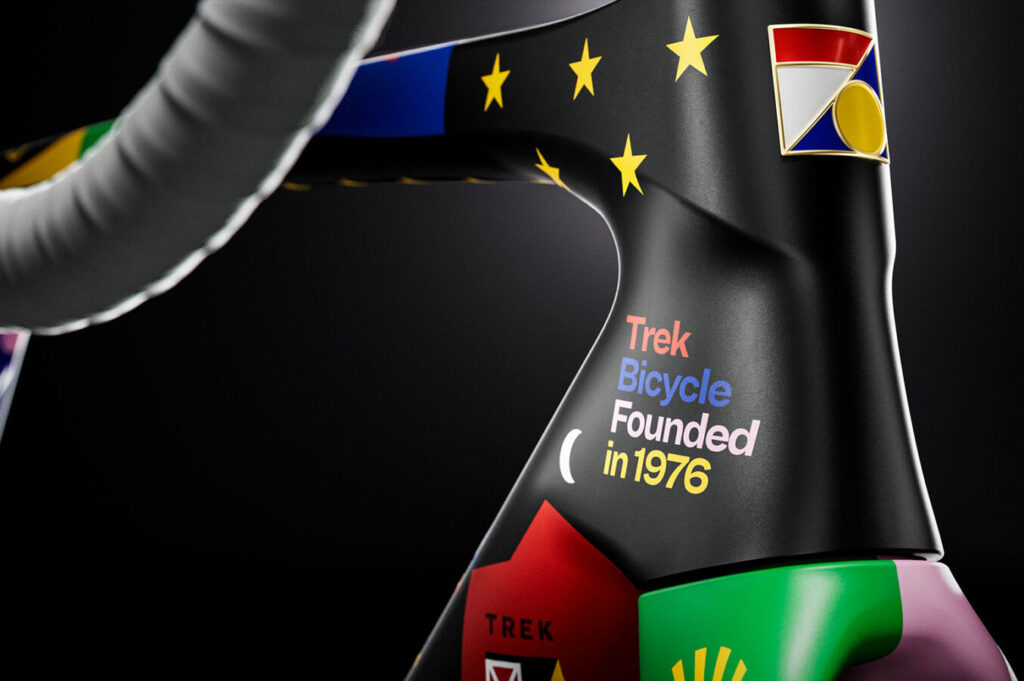
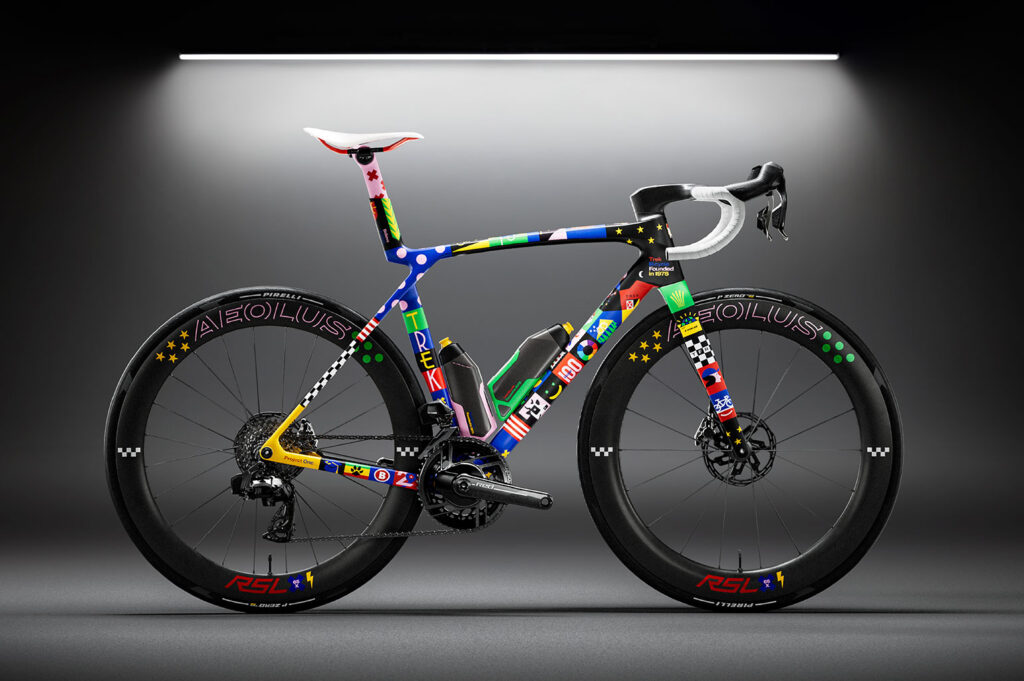
Trek marks its 50th anniversary in 2026 with the 50th Anniversary Collection, an anniversary programme that brings together five decades of cycling innovation. The centrepiece is the retrospective ’50 Bikes that Built Trek’, complemented by community events and a look back at the technologies surrounding the brand's growth from a Wisconsin workshop to participation in the WorldTour.
From red barn to OCLV Carbon
It began in December 1975. Founders Dick Burke and Bevil Hogg got $100,000 seed capital together to start from the Roth Corporation to build an American alternative to the dominant Japanese and Italian racing frames. The production site: a red barn of some 650 square metres in Waterloo, Wisconsin, previously used as carpet storage.
“There were no empty industrial buildings in rural Wisconsin. Nothing. This was it,” Hogg said of the choice of that location.
In 1976, with five employees, nearly 900 hand-drawn steel frames rolled off the line, each for about $200. By 1979, sales were already ticking the US$2 million mark. In 1980, Trek moved to a 2,400-square-metre factory, the moment when Burke says it became “a real company”.
Five bikes that formed Trek
The 50 Bikes that Built Trek-collection documents the transition from silver-soldered steel to advanced composites. Trek points to a handful of models in that series that continue to influence the current line-up.
- TX200 (1976) - Trek's first production frame, hand-built with Ishiwata-steel tubes and Nikko connectors. One of the first models from the ‘Red Barn’ period.
- Trek 2000 (1985) - Introduction of bonded aluminium, derived from aerospace technology. A break with traditional brazing.
- Trek 5500 (1992) - The first OCLV Carbon-race frame, at the time the lightest production frame in the world with 2.44 lb (about 1,107 grams). The direct predecessor of the current Émonda and Madone.
- Trek 9900 (1993) - OCLV translated to mountain bike; the lightest production MTB frame at the time (2.84 lb).
- Domane (2012) - Introduction of IsoSpeed, the decoupling system that allows the seat tube to rotate independently for comfort on cobblestones, without sacrificing frame stiffness.
For those looking for a modern road bike now, that means the following: The carbon lay-ups of current Madone and Émonda, known from the WorldTour via Lidl-Trek, have evolved directly from the OCLV line that Trek started in 1992. And the IsoSpeed-technology from the first Domane is still in the 2026 endurance models.
The failed 5000 as a turning point
A detail from the anniversary history: the Trek 5000 from 1989, Trek's first carbon monocoque, was a commercial failure. The frame was outsourced and the quality was disappointing. Yet that failure became the immediate reason to bring carbon R&D fully in-house, resulting in the OCLV process three years later: Optimum Compaction, Low Void. That method, with aviation-standard compaction to eliminate cavities in the laminate, set the industry standard for lightweight frames.
In addition, Trek grew through acquisitions. Gary Fisher (1993) brought instant credibility to the mountain bike segment, Bontrager (1995) became the house brand for components and accessories, and Electra (2014) opened the door to the lifestyle market.
Events and community
In addition to the bike collection, Trek is organising the anniversary year's Trek 100 VIP Anniversary Ride, a special edition of the annual charity ride that has seen more than $22 million has raised for the MACC Fund (Midwest Athletes Against Childhood Cancer). Participants will have access to the headquarters and R&D labs in Waterloo.
The events take place around the Waterloo headquarters and are linked to Trek's broader strategy of making brand history tangible through its 50 Bikes-exhibition and associated digital content.
More info on the 50th Anniversary Collection and the full list of 50 models can be found at www.trekbikes.com.