A smart helmet is not there to make you smarter. Alas, that would be another godsend. Helmet on, cycle and then suddenly step off the two-wheeler like Einstein. If only it were such a treat. No, a smart helmet, it actually helps with two things: 1. lighting and direction indication and 2. notifications if you have a crash (and then send them to family/friends etc). But is there perhaps more? We received a smart helmet, the Unit 1 Aura Smart Helmet, from helmet maker Unit 1 for review. We also got a few things with it, such as the smart light, indicator and magnetic visor. You can get away with that!
First look
Everything starts with a first impression. So we are sent several packs of items. These all look sleekly designed. When you look at the box, you immediately think: das a nice thing. And that is definitely worth something. So in our package were the following things:
- Aura Smart Helmet - colour grey (or chalk at Unit1)
- Smart light - can be used as either a front or rear light
- Remote - direction indication and brake detection
- Visor - handy if you don't have glasses with you
- Winter liner - a kind of helmet hat
The helmet
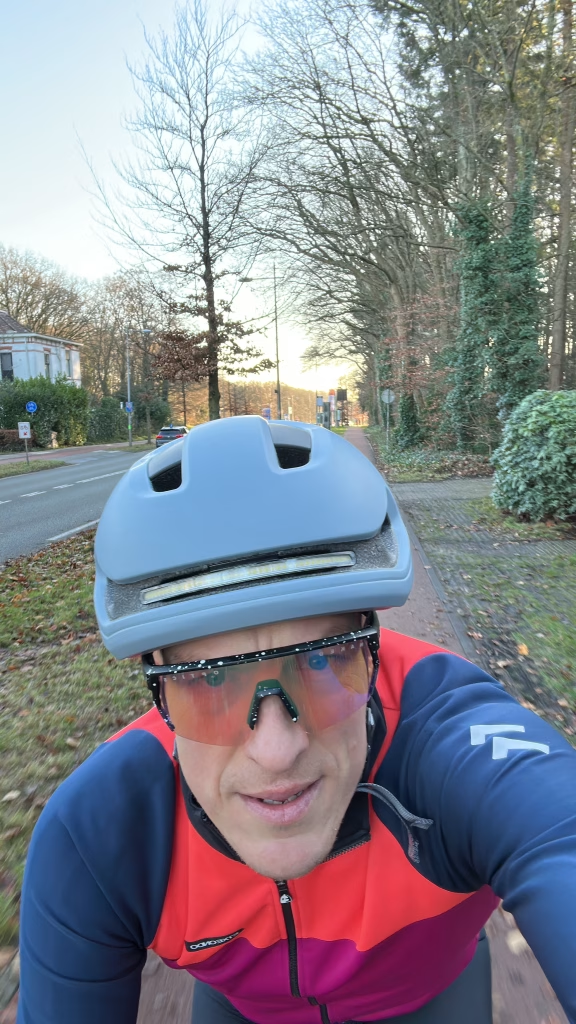
Let's start with the helmet. Just a disclaimer for road cyclists and gravel riders: this helmet is designed as an e-bike helmet. You can see that right away. So why did we test it on road bikes and gravel bikes anyway? It is a smart helmet, with built-in lighting. One of the things I notice a lot myself is that it is useful to be highly visible on the bike, at any time. In addition, the crash notification, the MIPS system and also the ability to indicate direction is something that I find useful.
The helmet, then. It is the Unit 1 Aura Smart Helmet, colour chalk (grey in practice), size L. The manufacturer quotes a weight of 440 grams (in size M) By comparison, an ABUS AirBreaker 2.0 with MIPS weighs 245 (in size M). The size L (which I need with my mega head) does clock over 500 grams. With the visor attached, it's even 610 grams. Das hefty, but you get something in return.

Lighting and more
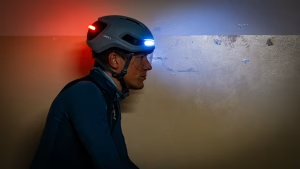
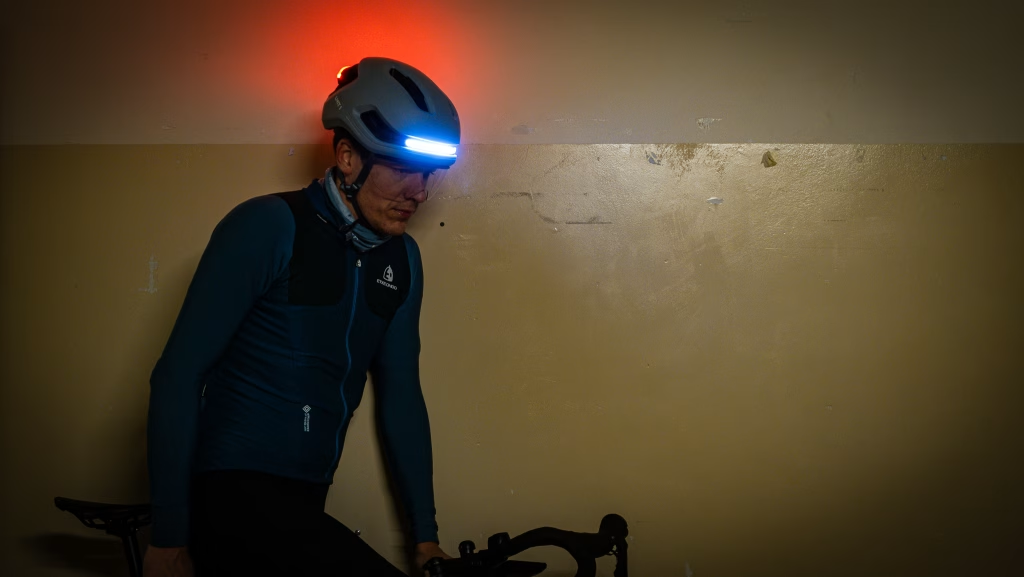
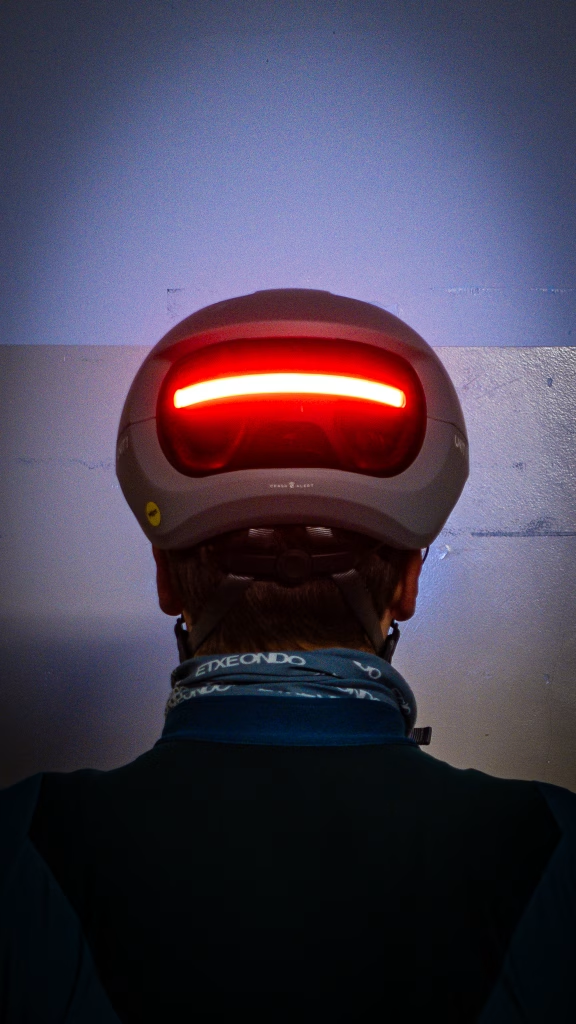
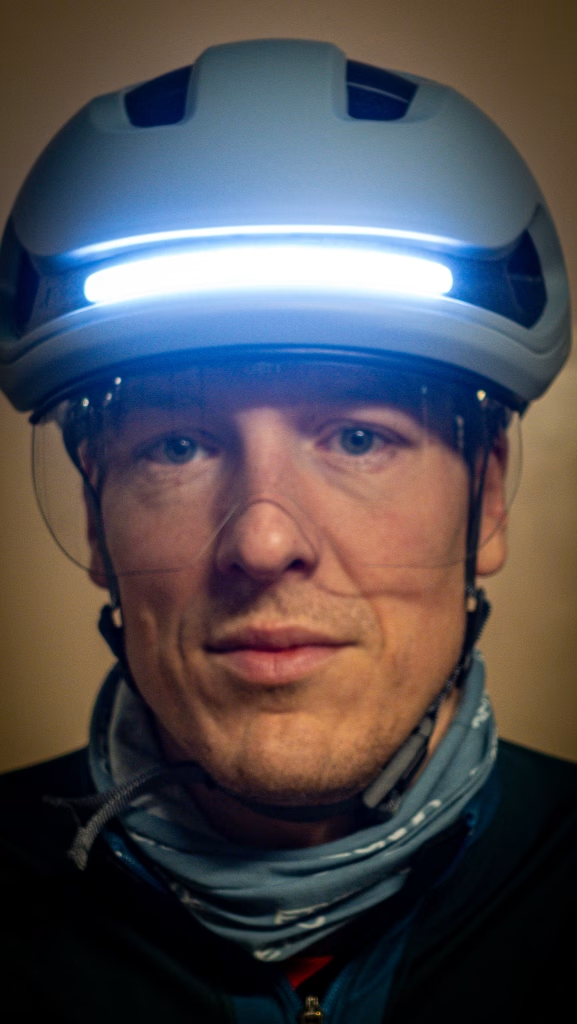
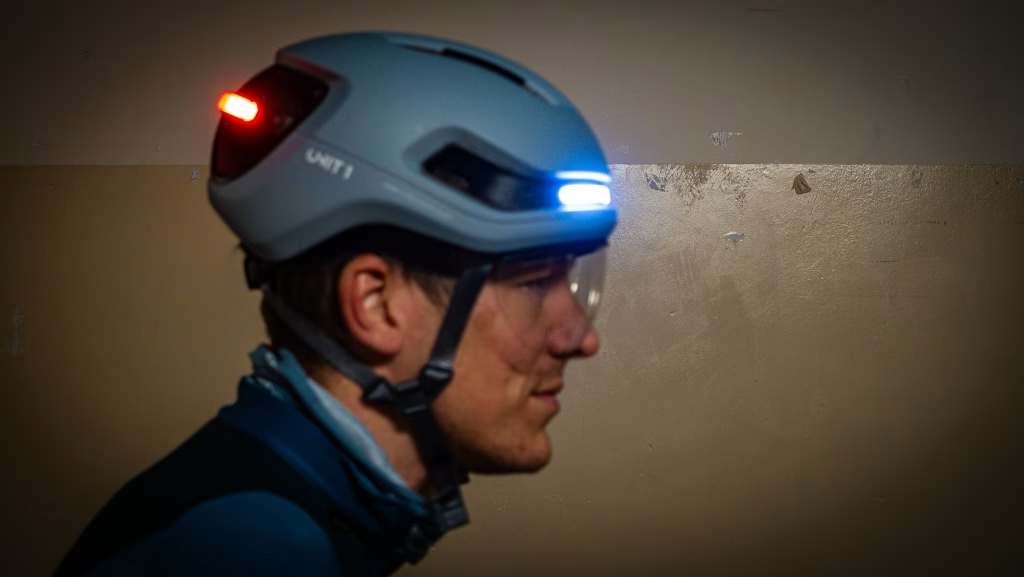
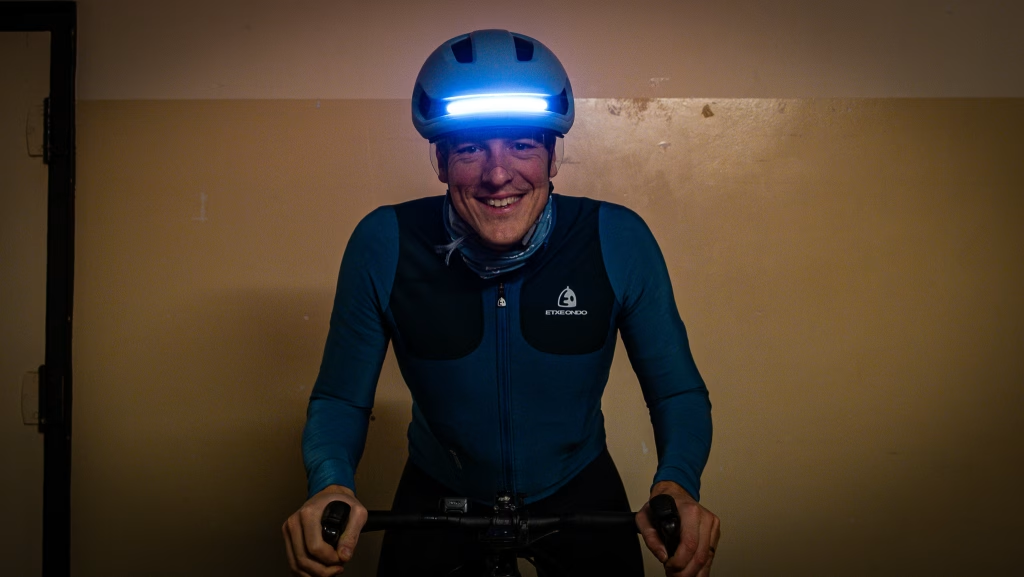
One of the most important things on this helmet is the light, or lighting altogether. Because you have a light bar at the front as well as at the back. The reason this helmet is a ‘smart helmet’ and not an ordinary bike helmet is precisely this light bar. You can pair it with the remote control (Remote). This can be done via UNIT 1‘s app and works quite intuitively. (More about the app later).
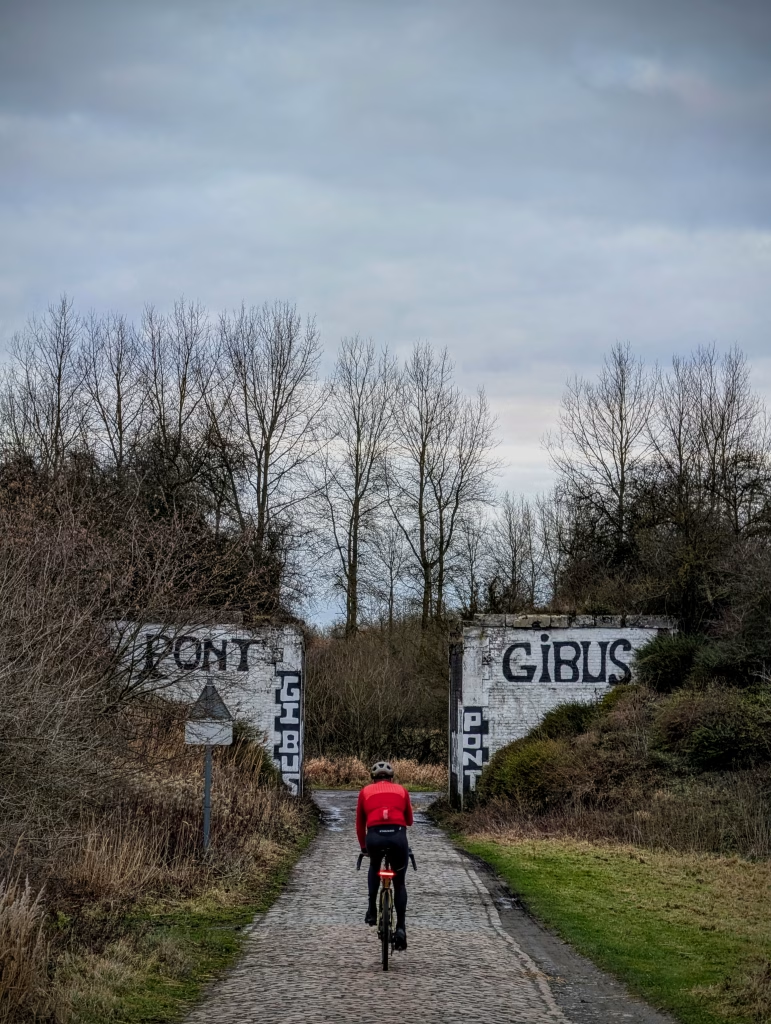
Once paired, you can indicate direction (an orange arrow to the left or right then shows) and the remote also recognises abrupt braking. This means that if you need to brake abruptly or, as we did recently, bounce over the cobbles of Roubaix, the rear light will flash. Others also described it as, ‘so, you have a disco on the back’. It stands out and that is the most important thing. It makes the light combination a safe smart combination and that is nice in busy (city) traffic.
Technical details: the helmet emits mere than 500 Lumens, making it a lamp that is on the edge of ‘see or be seen’. A lot of light, in other words. The helmet light is also visible through 360°. It is truly a shining example.
Safety first
Speaking of safety, the helmet has been tested to e-bike/speed pedelec standards. That means the helmet offers more protection at impact at higher speeds. Because many helmet makers don't tell you that: the average bike helmet is suitable for (city) bikes, road bikes and e-bikes. Tested up to a speed of 20km/h at impact. So the EN1078 standard applies to road bike helmets...
With an e-bike helmet, higher speeds and different standards apply, which indirectly also leads to the higher weight of the UNIT1 Aura. It is standardised to the NTA-8776 +45km/h and is also in line with the CPSC & EN1078. EN1078 is the bicycle helmet standard: it goes up to 20km/h at impact. The NTA 8776 standard also indicates that the helmet has been tested on a larger impact surface (including the temples) and has a thicker foam inside, so hence the higher weight. The MIPS system provides a piece of extra protection against possible concussions.
To the test
Ok. Enough about the helmet and the technical aspects. Obviously, the helmet is more than safe enough to go out in standard traffic and protect you from impact. But how does da sit on your head?
The helmet has a FidLock closure, which works slightly differently from the standard snap fasteners. This one you slide together, with a little magnet. It is just as safe and easier to take apart, because you can also loosen and tighten this closure (a so-called SNAP closure) with one hand. Should you find yourself in a predicament, this is nice. The helmet also has plenty of room if you have a slightly larger face. The straps are all easily adjustable, so you can adjust the helmet to the shape of your head. At the back, there is a standard wheel to tighten or loosen the helmet on your head.

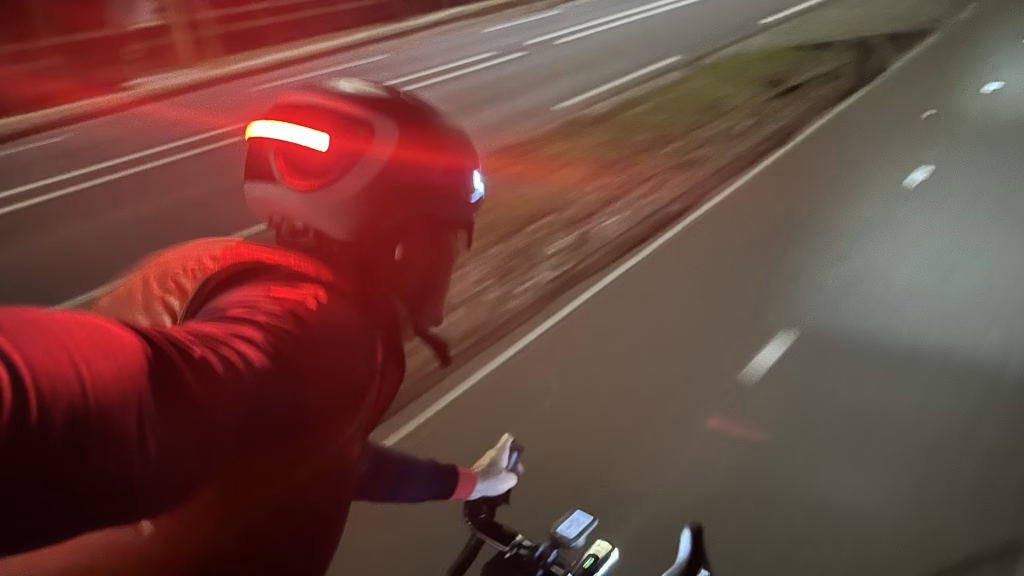
Once on, you don't immediately notice that the helmet weighs more than any other helmet. I use the helmet both with and without the supplied visor. I leave off the helmet visor, which you can also click on and helps in case of rain or other forms of dirt/wetness/sunshine coming from above. Like the visor, this one is easy to click on, with a magnetic attachment. Easy on and easy off. That's nice with the visor too, because should you crash hard, it comes off the helmet quickly and you don't suffer any impact.
One of the first times I test the helmet is on my road bike. It is a ride in December, on a Saturday. I start in the afternoon and already know that I will ride back at the end of the afternoon in (twilight) darkness. Helmet with me, rear light with me and make sure I am clearly visible. That's important.
Road bike helmet?
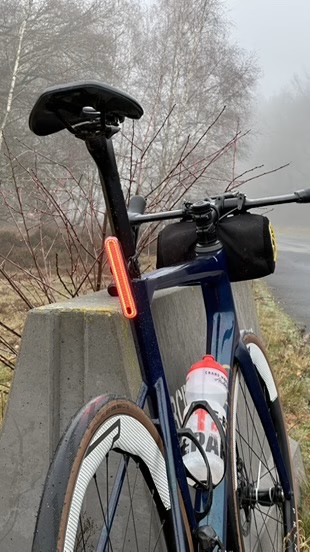
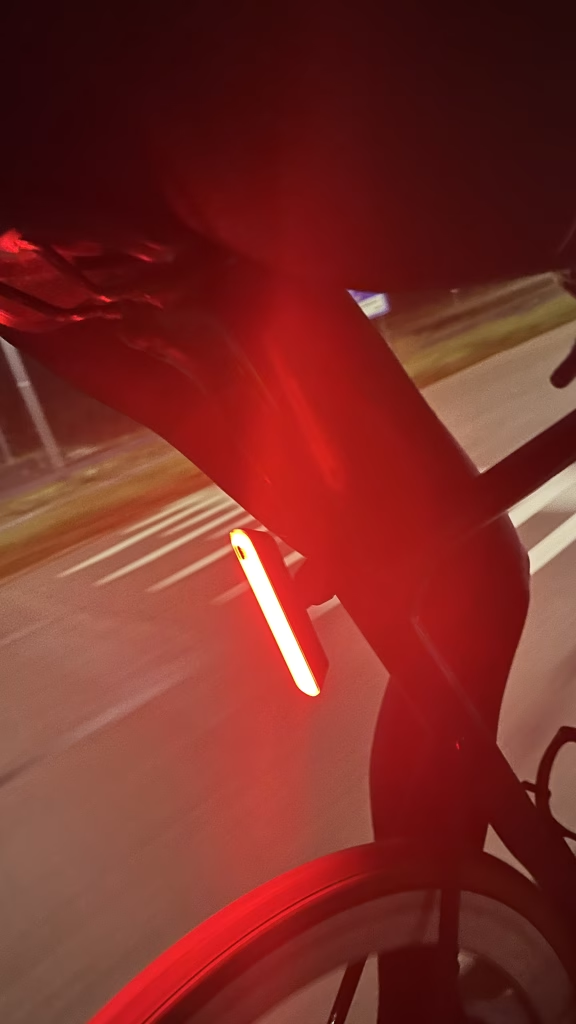
On the road bike, I sit in an ‘aggressive’ position as it is so nicely called. Way forward, despite my 1.93m height. Then you do notice that the helmet is heavier than normal. Whether 500 grams hangs from your head or 250 grams makes a difference. It takes some getting used to. After an hour of riding, I notice that my neck is not quite used to this. When I arrive at my destination (still in the light), it takes some adjusting. On an e-bike or speed pedelec, you generally sit more upright. It will probably take some getting used to. On the way back, I can try out my new ‘knightrider’ outfit. The helmet also goes on with a knightrider animation (for those who don't know: KnightRider). I haven't linked the helmet and lights to the remote then. But for the stretch I'll be riding (relatively straight ahead, outside built-up areas) I'll be fine with it. What's immediately noticeable: it's really well lit. So I have the helmet (where you have front and rear light) and I set the Smart Light to ‘red’ and put it on the back of my bike. That light gives 100 Lumens of light and is perfect for being seen.

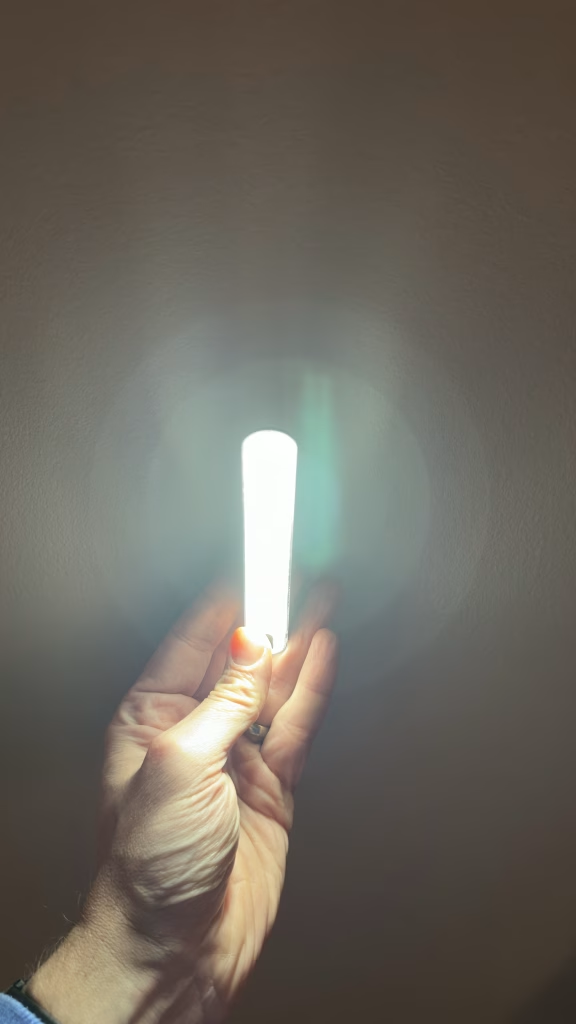
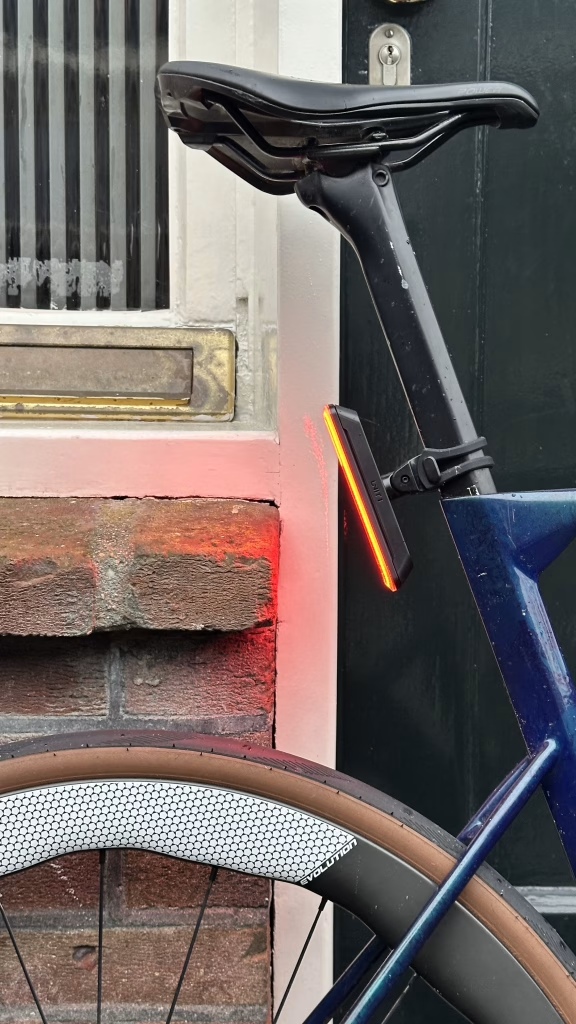
As a front light, I have an extra lamp, to be able to see the road. I especially like that myself. Because with the 500 lumens you can see a lot ahead with the helmet light alone. At least with the helmet on, I set off safely for my feeling. It's dark when I ride around and I definitely feel like I'm well seen. That might also be because people are not used to being able to see me with a light ON my helmet. Most cyclists ride with lights on their bikes. Then you do stand out with such an illuminated helmet. The ride home goes smoothly and nowhere do I have to look someone deep in the eye with my lights. Great.
Connected
It takes a while before I use the helmet again, because I do my follow-up rides all in daylight and then the helmet is a bit excessive I think. But when I return to the darkness a few weeks later, I sit down for it. I connect the helmet to the remote via the app and start playing around with what's possible. By the way, in the app you can adjust all sorts of other things, such as a rain mode, a daylight mode, you can set a crash alert and, of course, you can buy more goodies. But all in all, very handy and ingenious.
Remote and rear light
The remote, which you can easily attach to your handlebars, allows you to do two things: 1. indicate direction and 2. it detects acute braking. Indicating direction is something that might be underestimated, but as a cyclist you often have your hands full steering, especially if you have to brake for a corner. In the dark when you do get a moped behind you that wants to pass quickly, then a remote is really handy. It also makes it easier to pass an abrupt braking action, which is recognised by the remote, to those behind. I connect the remote to the Smart Light and to my helmet at the same time. When I then indicate direction, the signals go off in three places. Both at the smart light and at the front and back of the helmet. Very nice. When I go cycling with a friend, I make ample use of it. He has to laugh at first, but soon I hear approving noises when I indicate ‘left/right’. Fine then.
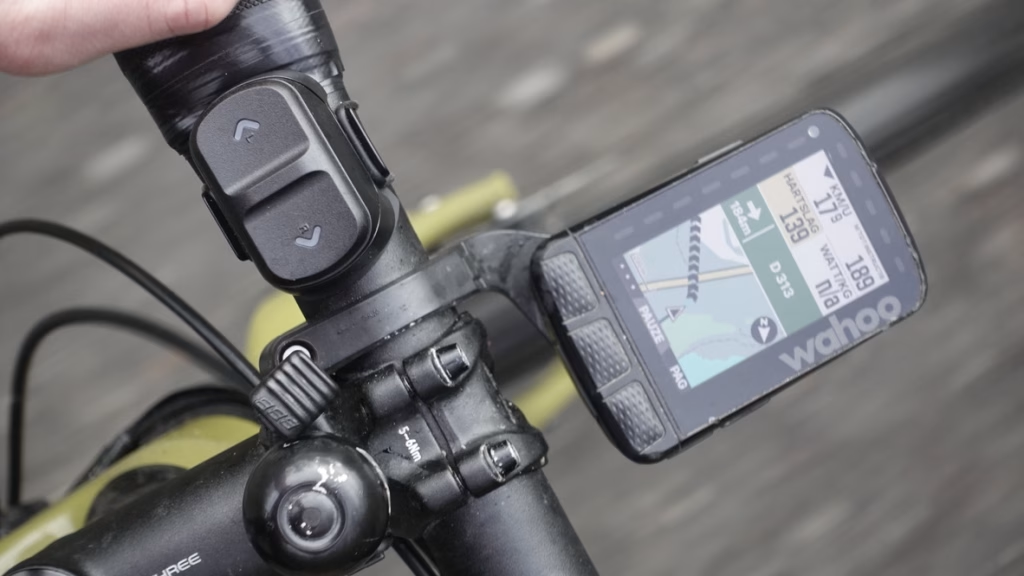
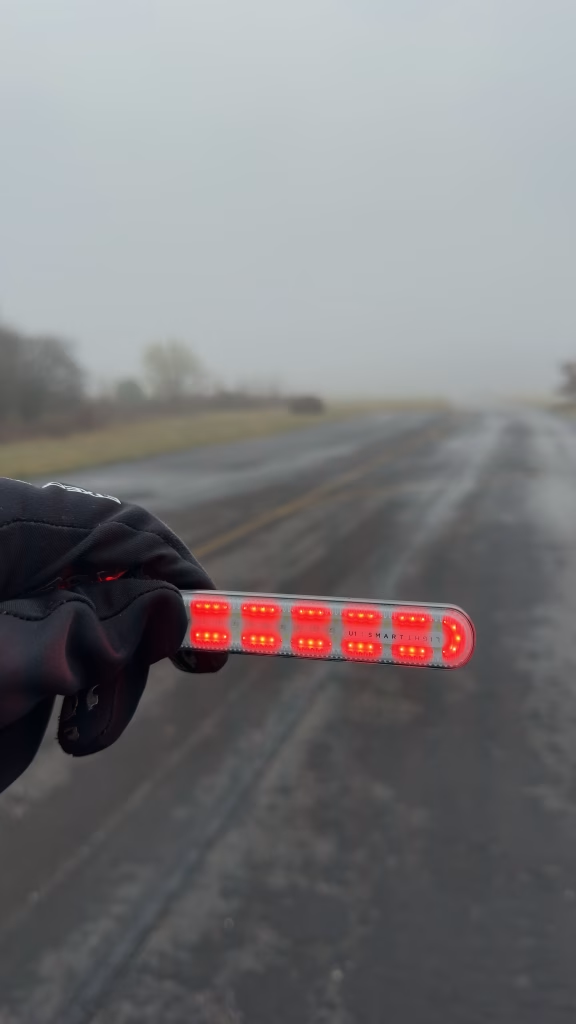
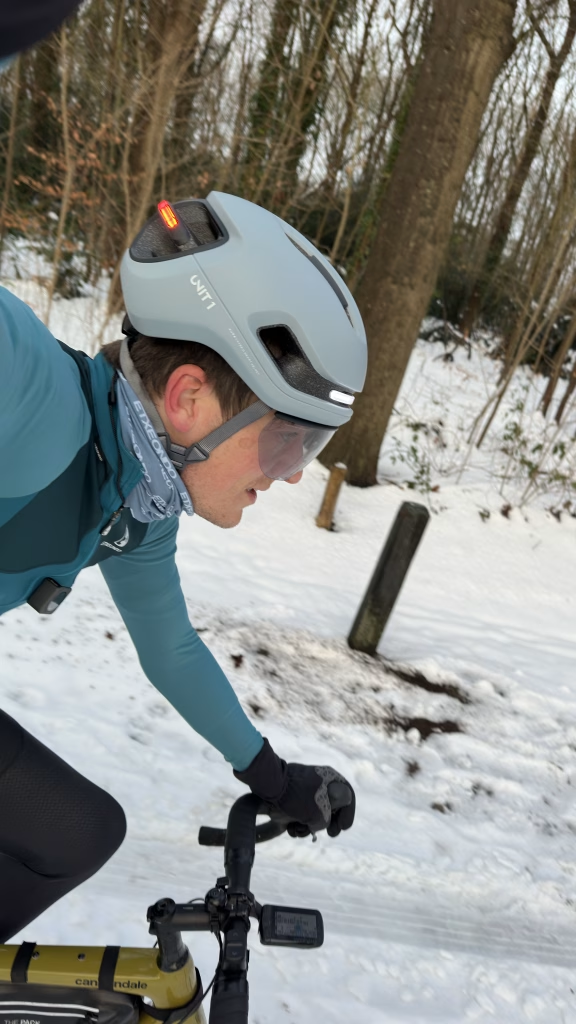
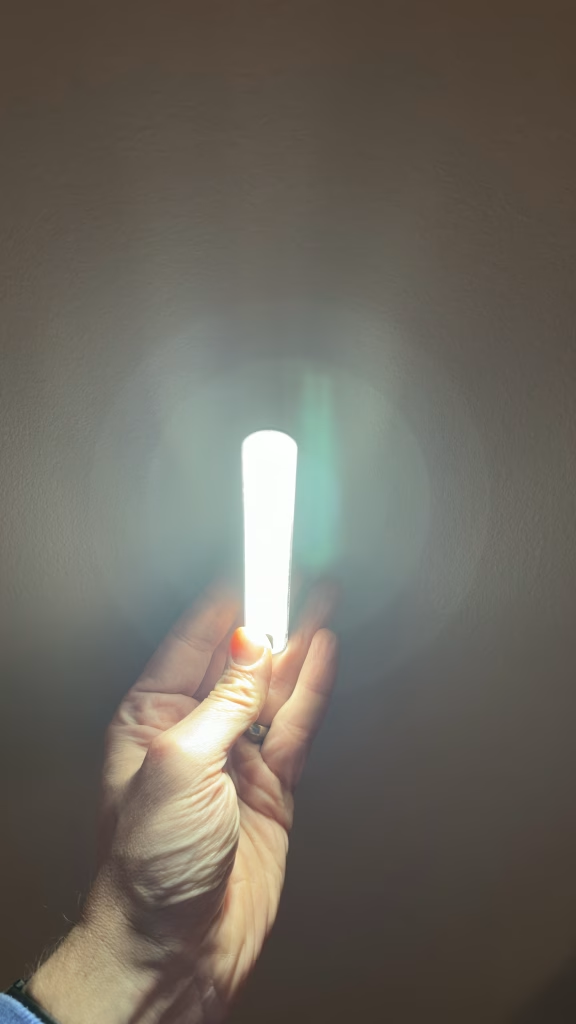
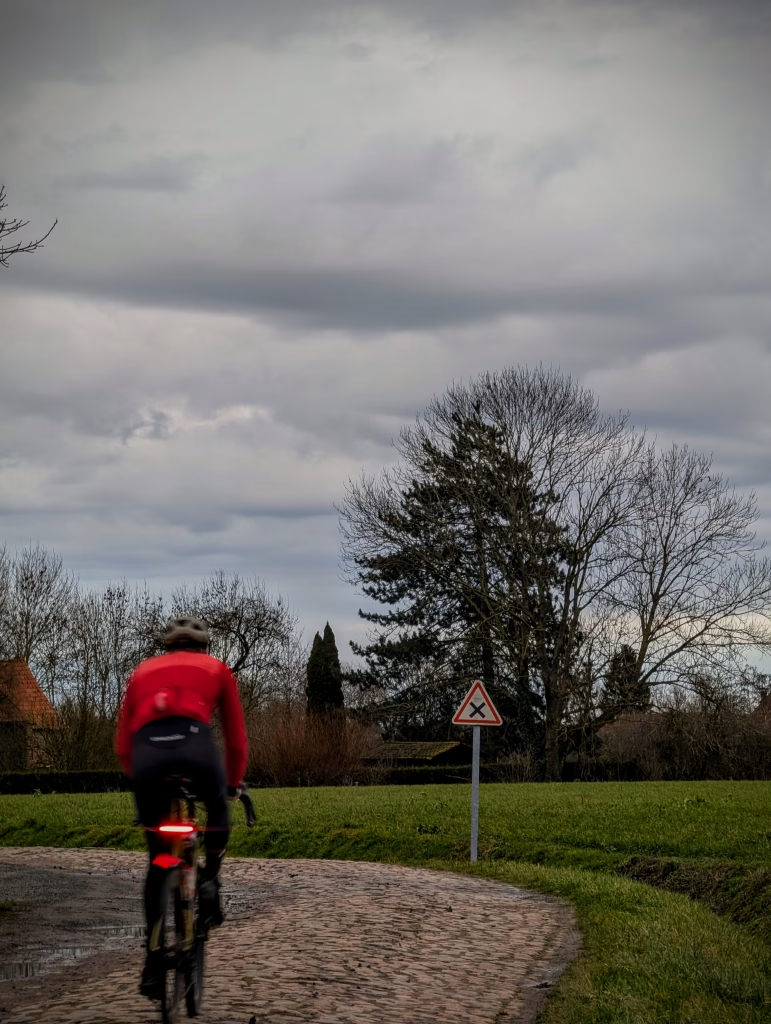
Over a period of several weeks, I test the helmet, with the remote and the lights, and I am getting more and more used to the whole setup. After my first ride with some habituation symptoms because of the heavier helmet, that is now completely gone. And I notice that many people still look at me, especially when I wear the helmet when it is not yet dark. The light and the remote, I'm actually happy with it. Especially when I go cycling the Roubaix lanes. Also does provide some extra visibility in the sometimes grey sky and when we cycle back almost in the dark, t still feels nice, having that wide lamp on the back.
But, should you buy it?
Of course, that always remains the question. Is it worth its money? If you want the helmet in my version, including all accessories, you will spend over €450. In a nutshell
- Unit 1 Aura Helmet - Chalk €259.90
- Helmet Visor Clear €39.90
- Unit 1 Remote €39.90
- Winter liner (a hat for under the helmet in winter) - €39.90
- Smart Light - €89.90
You can also buy the helmet without the visor, the liner and without the Smart Light. That saves €170. Then you are still just under €300 For a smart helmet. That is for a helmet at the upper end of the price spectrum. But what do you get in return? The positives and minuses in a nutshell
| Plus points | Minuses |
| Super-safe helmet | Weight |
| Very good lighting | Pricey |
| Direction indicator | |
| Crash detection (and notification) |
Based on this, I say: do it, for if you ride around in twilight more often. For example, if you cycle all year round. It's a bit of an investment, but it will pay off.
Order here: www.unit1gear.com