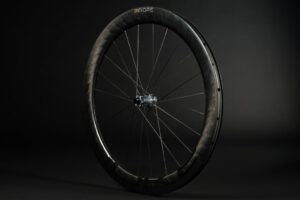
Pi string with the new Duke Strada Series a step towards wider use of textile stitches. The line-up, announced in May 2026, runs from the Street 30 (claimed weight: 850 gramsto the Street 56 and a Æra Street 56 with a CFD-optimised rim surface and a claim of “up to 10% less aerodynamic drag.” At the heart of every wheel: Vectran® spokes, the same material that Pi Rope has been using since 2018.
On paper, that's impressive, but road cyclists ask tougher questions than mountain bikers. How do textile spokes compare when it comes to aero depth, steering precision, ease of maintenance, and a price tag around €2,500–3,000 in the equation throws?
Weight and cushioning
The weight saving is real. Vectran has one-fifth the density of steel at one and a half times the tensile strength, thus Pi Rope. Per spoke, that's roughly half compared to classic steel. In a complete wheel, that adds up: the earlier Duke Baccara Ultra SLR2 36 Wooga 985 grams per set, and the Strada 30 dives well below that.
The ride quality confirms the pattern. Bicycle Test Pi rope wheels recorded better damping and comfort. A Controlled vibration analysis of CyclingAbout, executed with similar polymer spokes (Berd, UHMWPE), matte 16% reduced lateral vibrations and 17% reduced front-to-rear vibrations on rough terrain. The comfort gain therefore lies in vertical damping as well as how the wheel reacts sideways and in the direction of travel.
Critical eye
The same flexibility that provides comfort comes with a downside. BIKE noted that the lateral stiffness of Pi Rope wheels was low, and some test riders found the steering feel to be “too indirect.” The CyclingAbout data confirms this: 20–24%: reduced lateral stiffness than identical wheels with steel spokes.
With shallow rims (30–36 mm), this is acceptable for most riders. But with 48 and 56 mm depth, where you expect a premium wheel to steer crisply and predictably, that trade-off becomes sharper. The Æra Street 56 claims aerodynamic gains through CFD optimisation of the rim surface, but independent wind tunnel data for the complete system, including spokes, is not yet available. For reference: CycloWorld observed with comparable polymer spokes that they are “less aero than flat aero spokes.”
Another point of attention: Pi Rope's catalogue lists a maximum operating temperature of 60°C and a requirement to regularly treat the spokes with the protective agent PI PROTECT, which can wear out due to harsh washing or pressure washers. The previous wheel model had a maximum system weight of 95 kg, which, with rider, bike, bottles and wide tyres, is quickly reached.
For whom.
The Strada series is most compelling as a climbing wheel or an all-round wheel in the 30–36 mm range. Every gram counts here, lateral stiffness is less critical, and the damping gains are best appreciated on longer rides over varied road surfaces.
Who 56 mm The Diep aero wheel is, at present, primarily a promise. The rim technology appears sound, but the combination of textile spokes, deep rim, and premium price point demands independent validation that is not yet available.
Practical considerations:
- Weightcompetitive, with claimed 850 g for the lightest set
- Dampingindependently validated benefit on rough roads
- Lateral stiffnessmeasurably lower than steel
- AeroClaims present, independent data not
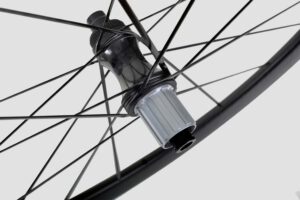
- Maintenancemore specific than standard spokes, with own protective product and branded parts
- System weight: please note the 95 kg limit from previous models
More info at pirope.net.