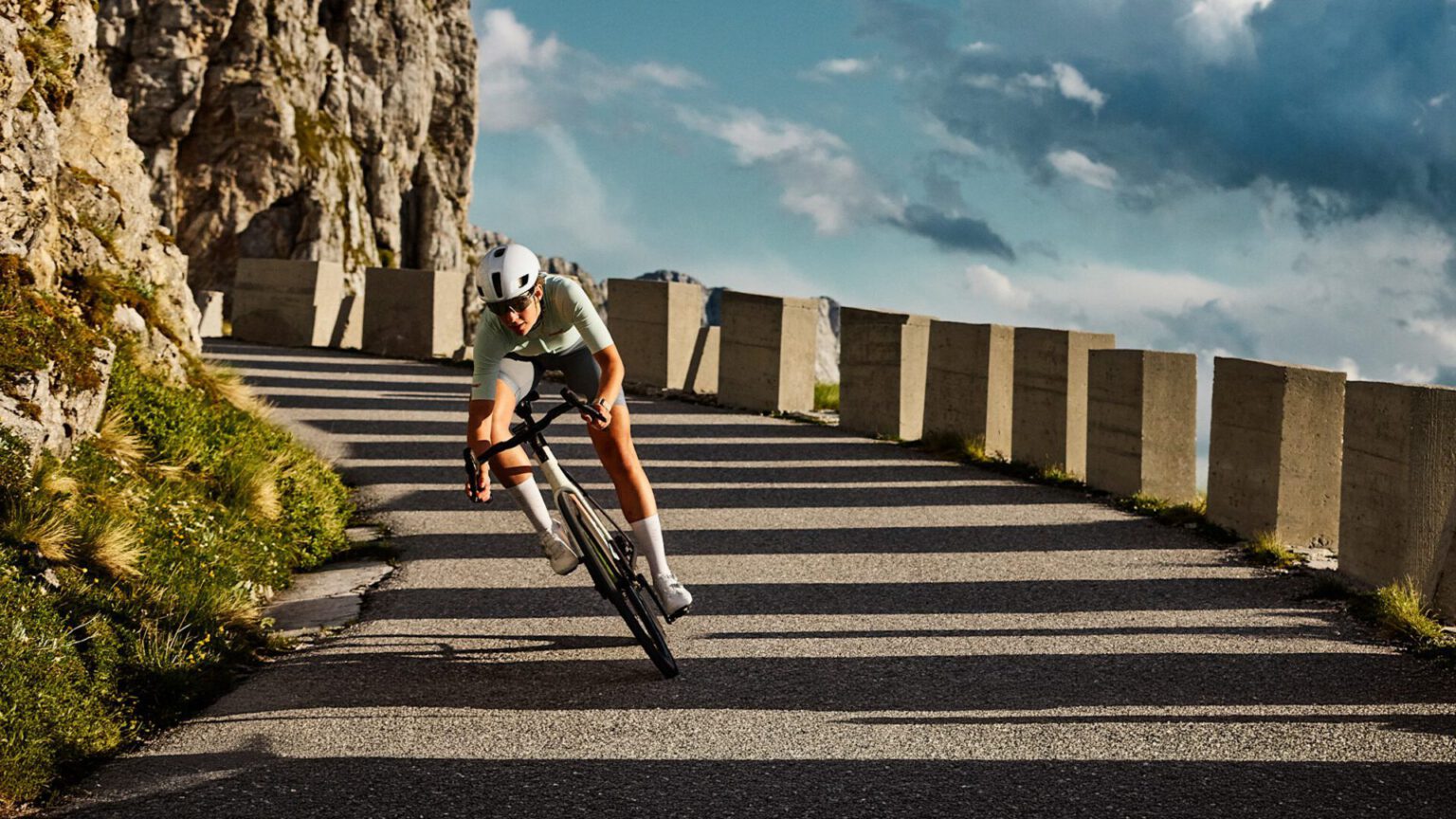
Since 2012, the IsoSpeed-Uncoupling the Trek Domane trademark: a hinge between the seat tube and the top tube that allowed the seat tube to rotate. Fabian Cancellara, Lizzie Deignan and Elisa Longo Borghini won Paris-Roubaix with it. In the new, fifth generation Domane, IsoSpeed has disappeared. Trek explains in a comprehensive whitepaper why that might be the case.
Wide tires took over the work
The first Domane was fitted with 25 mm tires with rim brakes, and those narrow tires had to be inflated hard. You needed IsoSpeed for that. With disc brakes, there was room for much wider tires that allowed for a softer ride. The Gen 5 comes standard with 35 mm tyres (except the SLR 9 AXS 1x). This allowed Trek to build a lighter, simpler bike.
The comfort comes from three things:
- The saddle post: oval on the inside so that it bends vertically when you hit it but remains rigid on the sides when you steer.
- The frame: The carbon construction is adapted to both comfort and stair stiffness.
- The tires: 35 mm, driven at a lower pressure.
Lighter and more rigid
The Gen 5 is 292 grams lighter Then the Gen 4, and without the maintenance that IsoSpeed asked for. In the stair stiffness test of the German Tour Magazin, he scores 6 percent better. According to Trek, this places it exactly between the old Domane and the Madone Gen 8: not as stiff as a pure race bike, but with noticeably more direct power on the pedals.
Measured on the production line
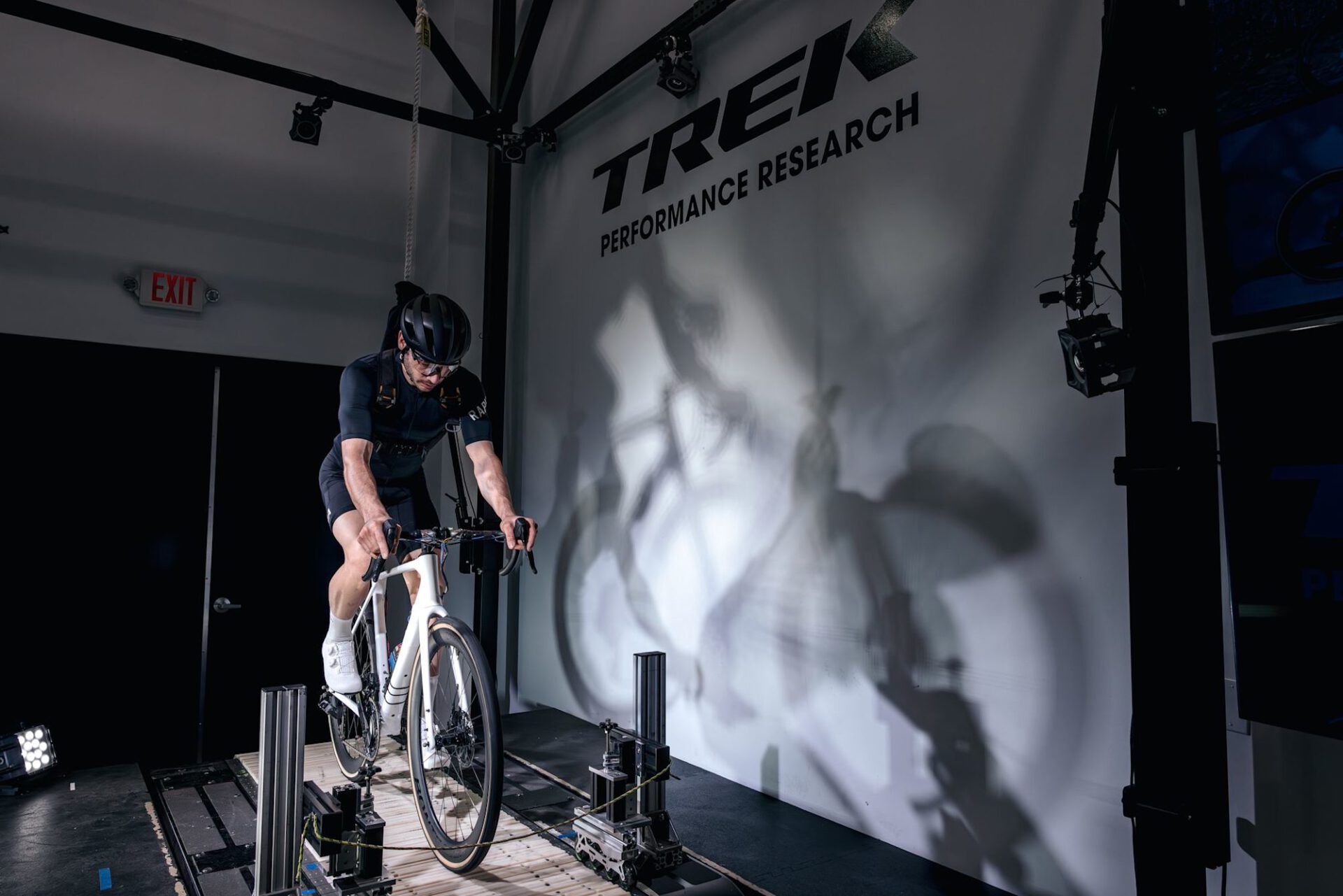
Normally, you measure comfort by hanging weights on a saddle and seeing how much the frame bends. Trek finds that to be too limited, because wheels and tires don’t count and there’s no pedaling involved. In the Trek Performance Research Lab, a test rider therefore rides on a special treadmill with a rough road surface. Sensors in the saddle and handlebar measure the amount of vibration energy that reaches the rider.
The results: with old-fashioned 25 mm tires, the rider, even with IsoSpeed, 19 percent more vibrations It can be processed on the Gen 5. Compared to the Gen 4 on 32 mm tires, the Gen 5 on 35 mm tires (with 10 percent lower pressure) fits within the limits. 5 percent With 3D motion capture, Trek saw hardly any difference in how the saddle and the rider move: less than a tenth of a millimeter.
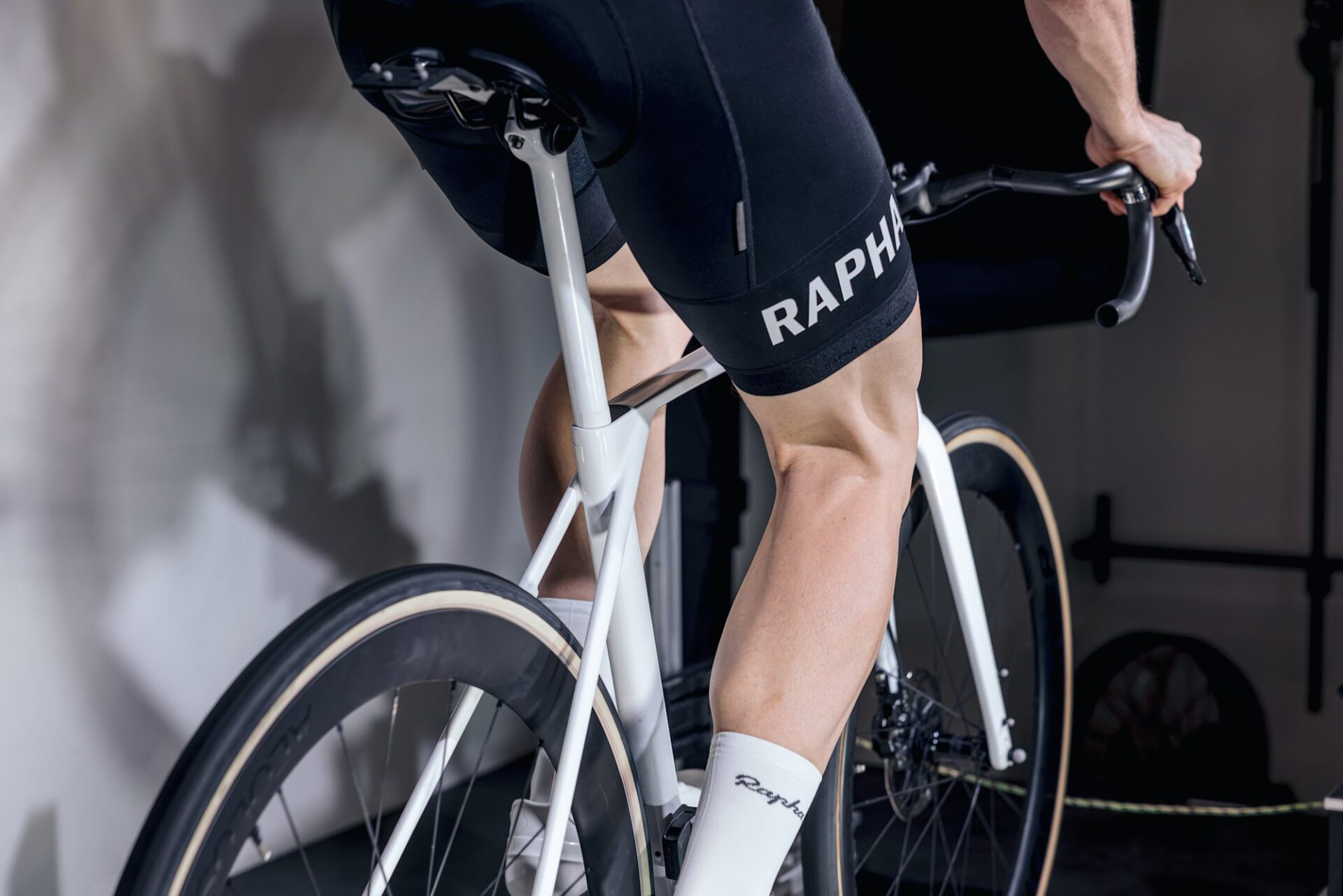
In addition to the lab, there was also plenty of riding: the pre-series models had already covered more than 400 hours and almost 10,000 kilometers when writing the whitepaper. The familiar endurance geometry and seating position of the Domane remain the same.
Our perspective
Honest from Trek: they themselves admit that the Gen 5 is a fraction less comfortable than the Gen 4 with IsoSpeed, but that you get 292 grams, extra stiffness and less maintenance in return. This confirms what we also notice: width and tire pressure determine comfort more than clever frame tweaks. If you ride the Gen 5, don’t pump up the tires too hard, otherwise you’re actually sacrificing that comfort.