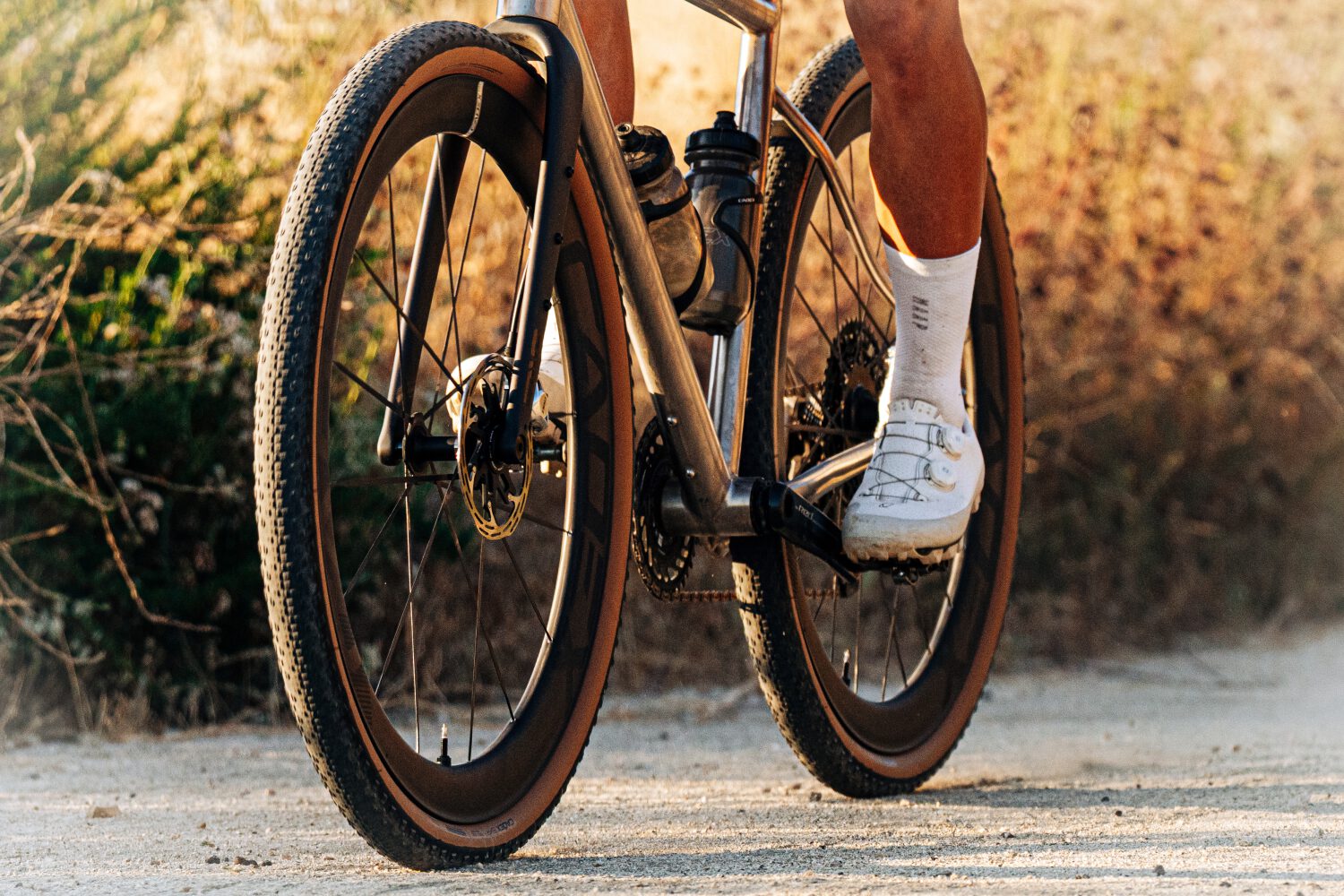
CADEX introduces the Max GXR WheelSystem, a wheelset for gravel racing with 50mm deep aero rims, carbon spokes and a system weight of 1320 grams. The brand positions the wheels as race-ready, with minimal air resistance and drivetrain losses as the main promises. The question is how much a gravel rider notices of this.
First look
The main specifications according to the CADEX product page:
- 50mm Saddle height
- Super Aero carbon spokes
- CADEX Max hub
- 1320 grams System weight
- 1280 grams without valves and tape
That weight is remarkably low for a wheelset of this depth. For comparison, the ENVE SES 4.5 AR Disc (49mm front, 55mm rear) weighs 1519 grams without valves and tape. The CADEX Ultra 50 Disc, the brand's road model, arrived 1382 grams.
The Max GXR therefore combines depth with a weight closer to shallow wheels. This partly negates the classic objection that deep rims are heavier.
Why 50mm is now appearing on gravel
The trend towards deeper gravel wheels is not new. ENVE, Zipp and Hunt have long offered wheels with a depth of 40 to 55 mm that are explicitly positioned for gravel or all-road. The Zipp 303 Firecrest (40mm, 25mm internal) is used by testers on gravel and cyclocross. The Hunt 48 Limitless Aero Disc is another example from the category.
In the meantime, the test data that supports aero on gravel is becoming more concrete. Swiss Side calculated that a typical gravel bike at 30 km/h approximately 40W has more total resistance than a road bike, divided between air resistance and rolling resistance. Wheel and tyre choice together can, according to the same report, lead to 5W save via the wheel and to 12W by the band.
Over a fully Unbound Gravel 200 translates to a saving of more than 8.5 minutes, according to Swiss Side. Hunt arrived at a similar conclusion in their own aeropaper: the difference between a non-optimised wheel and an aero wheel was 9.03W at 32 km/h, good for more than 6 minutes over the same race distance.
Waar de winst echt zit
The figures mainly apply under certain circumstances. Aerodynamic drag only becomes the dominant factor from approximately 22 km/h. The slower you go, the less benefit you get from a deep wheel.
On flat or gently undulating gravel fire roads, where you're riding above 25–30 km/h for extended periods, a 50mm rim works to your advantage. On technical, rough terrain where speed constantly drops, the effect becomes negligible. Here, rolling resistance, comfort, and tyre pressure choice dominate.
Beyond aerodynamics, the wheel-tyre combination plays a role.
A wider rim can also improve the tyre shape. Swiss Side measure that a wider gravel rim makes the transition from tyre to rim smoother, allowing airflow to hug the rim better. This effect yields up to approximately 5W compared to a standard gravel wheel. Despite its pronounced aero profile, a wide, deep wheel can therefore also improve tyre performance, provided the tyre fits the rim well.
The downside: every 10mm extra bandwidth increases air resistance by approximately 3.6W at 30 km/h. Anyone combining a 50mm rim with a wide, knobbly tyre will give back some of the aero gains.
Trade-offs
Deep rims have disadvantages:
- Greater sensitivity to crosswinds
- Higher costs, particularly with premium carbon systems.
- Need to match tyre size and rim correctly
- Hookless compatibility that can restrict tyre choice
Dat road.cc in de Hunt-range een gewichtsverschil van 124 grams the difference between the shallowest and deepest model illustrates the usual trade-off. At CADEX, that penalty is partly offset by the low system weight of the Max GXR.
For whoever this makes sense to
According to the available data, a 50mm gravel wheel primarily provides measurable time gains for riders who race, maintain speed on open roads, and tailor their tyres to the terrain. Think of events like Unbound, flat gravel marathons, or fast fire-road races.
For the rider seeking mixed terrain, riding at lower speeds, or prioritising comfort and tyre volume, the biggest gains are more likely to come from internal rim width, tyre choice, and pressure tuning. A shallower 30–40mm wheel with a wide internal measurement often covers those needs better, and costs less.
The Max GXR confirms that 50mm on gravel is primarily a racing tool for specific conditions.