For those who already know that the next bike will be electronically shifting, the real choice comes down to two ecosystems. Shimano Di2 is a safe all-round option for many road cyclists: familiar two-button operation, a single main battery, and a braking feel that returns as progressive and predictable in direct comparisons. SRAM AXS is a strong choice for riders who value fully wireless shifting, interchangeable batteries, and a pronounced gravel and 1x ecosystem.
Below are the main comparison points.
- OperationDi2 two buttons per shifter, AXS one paddle per shifter
- NauseaDi2 progressive and predictable, AXS more direct initial bite
- BatteriesDi2 one internal battery (±1,000 km), AXS two separate batteries (±60 hours each)
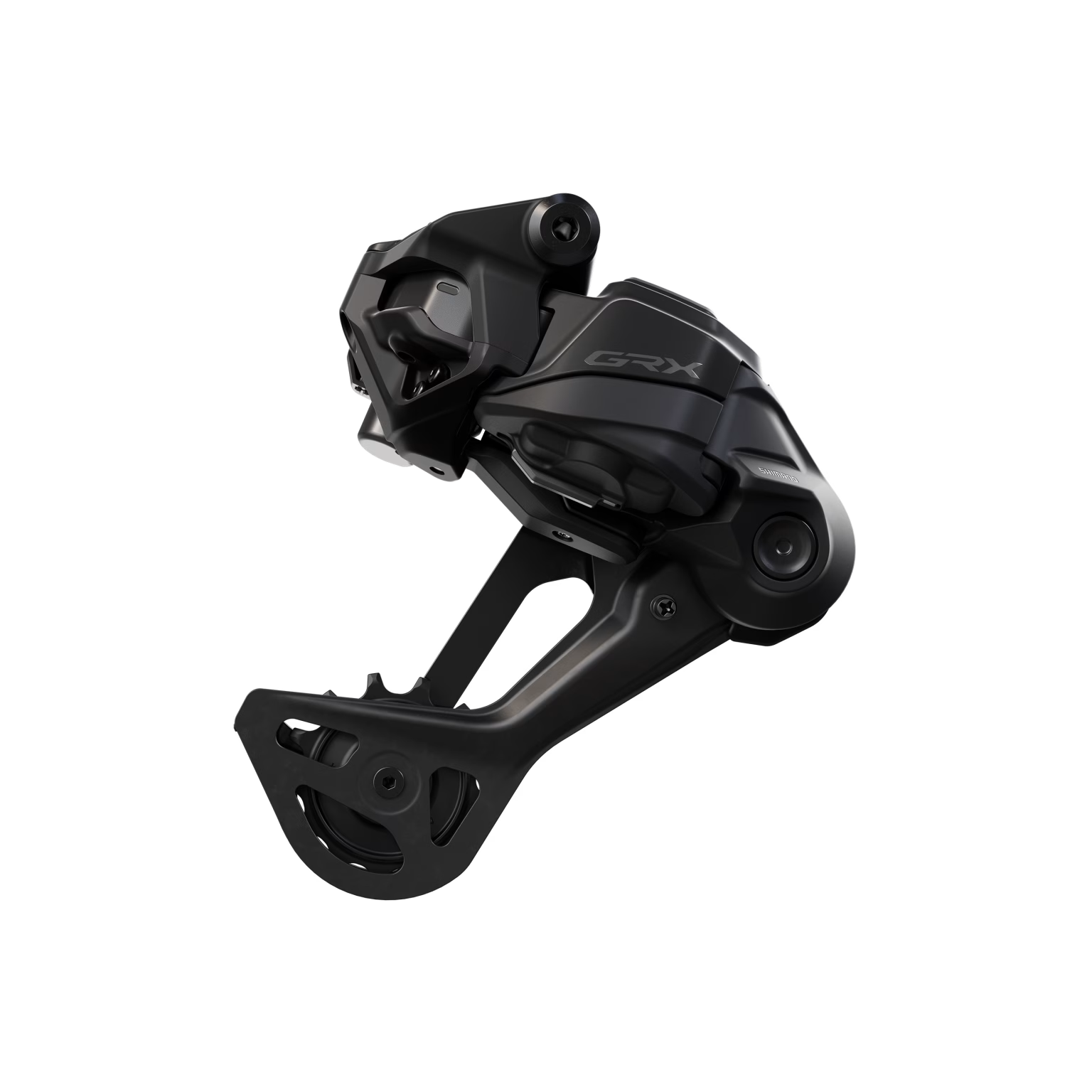
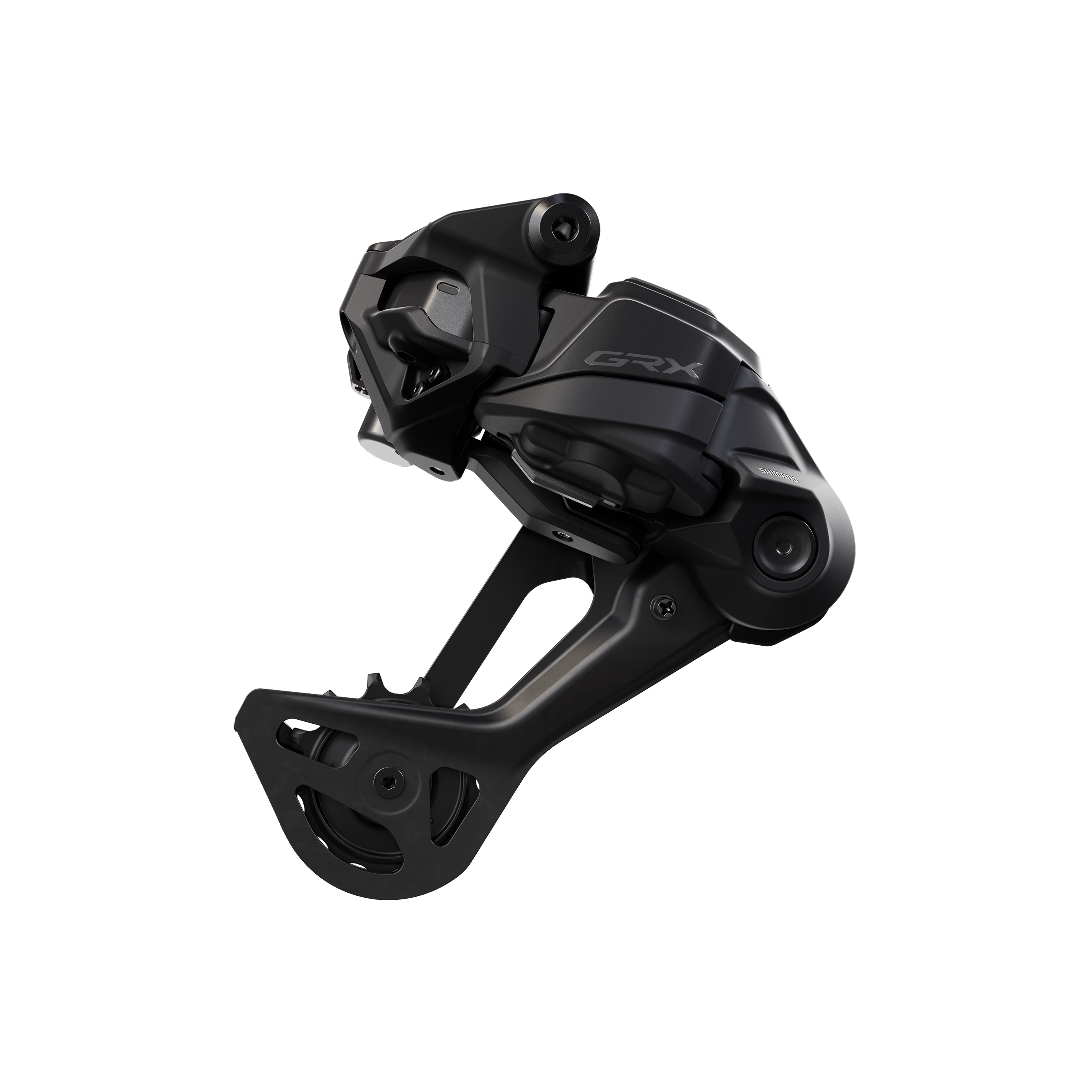
- Gravel supplyDi2 via GRX in 2x12 and 1x12, AXS via XPLR in 1x12/1x13 with 10-46 cassettes
- AppDi2 via E-Tube (button assignment, synchro modes), AXS app (shift behaviour, ride data)
- Service en routeDi2 charging cable, AXS spare battery
Operation on the canopies
Shimano Place two shift buttons on each shifter, similar to mechanical shifting. One button shifts lighter, the other heavier. Via the E-Tube app, you can also choose between manual, semi-synchronized, or fully synchronized shifting, where the system automatically operates the front derailleur.
SRAM works with one paddle per shifter. By default, the left paddle shifts lighter and the right one heavier; both at the same time activate the front derailleur. Via the AXS app, you can invert this assignment or activate functions like Sequential Shift and Multishift.
What hood shape is reported BikeRadar that Shimano’s hoods feel more compact and smaller, which works better for smaller hands. SRAM’s hoods are more pronounced, with a shape that offers more grip. The latest Red AXSThis generation is slimmer and lower than previous models.
Nausea
Shimano's hydraulic brakes are described in direct tests as progressive: power builds gradually the harder you squeeze, with Servo Wave technology on the higher-end groupsets. SRAM offers a stronger initial bite and a more linear feel. Which system you prefer is personal, although BikeRadar calls Shimano's brake feel “firmer at the lever” while the latest Red AXS brakes are labelled as a benchmark in recent reviews.
Batteries and charging
The battery construction is clearly different.
Di2 uses one internal Li-Ion battery housed in the seatpost or frame. Charging is done via a port on the rear derailleur, without removing the battery. Shimano states around 1,000 km per charge for 12-speed systems. Additionally, the shifters contain CR1632 coin cells that last approximately 2 years for Dura-Ace and Ultegra, and approximately 4 years for 105 Di2 and GRX Di2.
AXS Place a separate, removable battery on each derailleur. You take these off and slide them into an external charger. SRAM gives 60 hours for a Volex road derailleur battery. The shifters use CR2032 cells which, with normal use (15 hours per week) last around 2 years.
What happens with a low battery?
At Di2 The front derailleur fails first. You can still use the rear derailleur for approximately 100 to 200 km afterwards. One system, one warning. This is quite nice in itself.
At AXS The empty derailleur remains in the last selected gear. As the batteries are identical, you can move the front battery to the rear derailleur to finish your ride. Handy on the go, but it does require you to keep an eye on two batteries.
Gearing: race vs gravel
For the road offers Shimano 12-speed cassettes ranging from 11-30 (Dura-Ace) to 11-36 (105 Di2 with a long cage), combined with 2x chainrings such as 50-34 or 52-36. The gear spacing is familiar and finely graduated.
SRAM uses X-Range with 10-tooth sprockets on many cassettes. This delivers a wider range for an equal cassette size, with slightly different cadence jumps between the sprockets.
For gravel, philosophies diverge more strongly. GRX Di2 exists in 2x12 (for mixed road/gravel) and 1x12 (pure off-road). SRAM XPLR Focus more on 1x with wide 10-46 cassettes, and in recent generations it even offers 13-speed. Do you ride a lot of mixed terrain with the occasional bit of tarmac? Then GRX 2x12 gives you finer pedalling on the road. Are you looking for simplicity and maximum range on rough gravel? Then the XPLR concept is a better fit.
App en personalisatie
Shimano's E-TubeThe app offers button mapping, pairing with cycling computers via D-Fly, and three synchro modes that automate the front derailleur. Firmware updates are handled via the same connection.
The AXS-app continues in ride data: you see which gear you cycle in most, how often you shift and in which power zones you ride (with a power meter). Additionally, you can set up Enhanced Mode and Sequential Shift, which, like Shimano's synchroshifting, keep the chain straight.
SRAM AXS positions itself as a cross-category platform regarding compatibility: recent Red AXS remains 12-speed and is backward compatible with older 12-speed AXS road components. Shimano builds its ecosystem around a shared Di2 architecture for road, gravel, and MTB, but does not freely mix between those categories.
Choose Di2 if you…
- A trusted two-button control
- Prefer one battery charges via the bike to managing loose batteries
- Progressive, predictable braking feel preferred
- A 2x12 gravel option wants to join your bike group.
Choose AXS if you...
- Fully wireless derailleurs and interchangeable batteries
- An explicit 1x gravel ecosystem with wide range sought
- Finds detailed driving data and shift personalisation via the app important
- Spare batteries want to take on multi-day trips